

Why Space Matters
Where we sit shapes how we feel. A spot associated with work, chores, or screens is less likely to invite rest. A spot associated with reading, quiet, or a warm drink tends to do the opposite — not because of anything magical, but because the brain links places with expectations.
Having even a small dedicated space makes rest more accessible. It removes the effort of deciding where to go, and it gives the pause a physical shape.
A Few Simple Basics
None of the following are requirements. They are simply the things that often help:
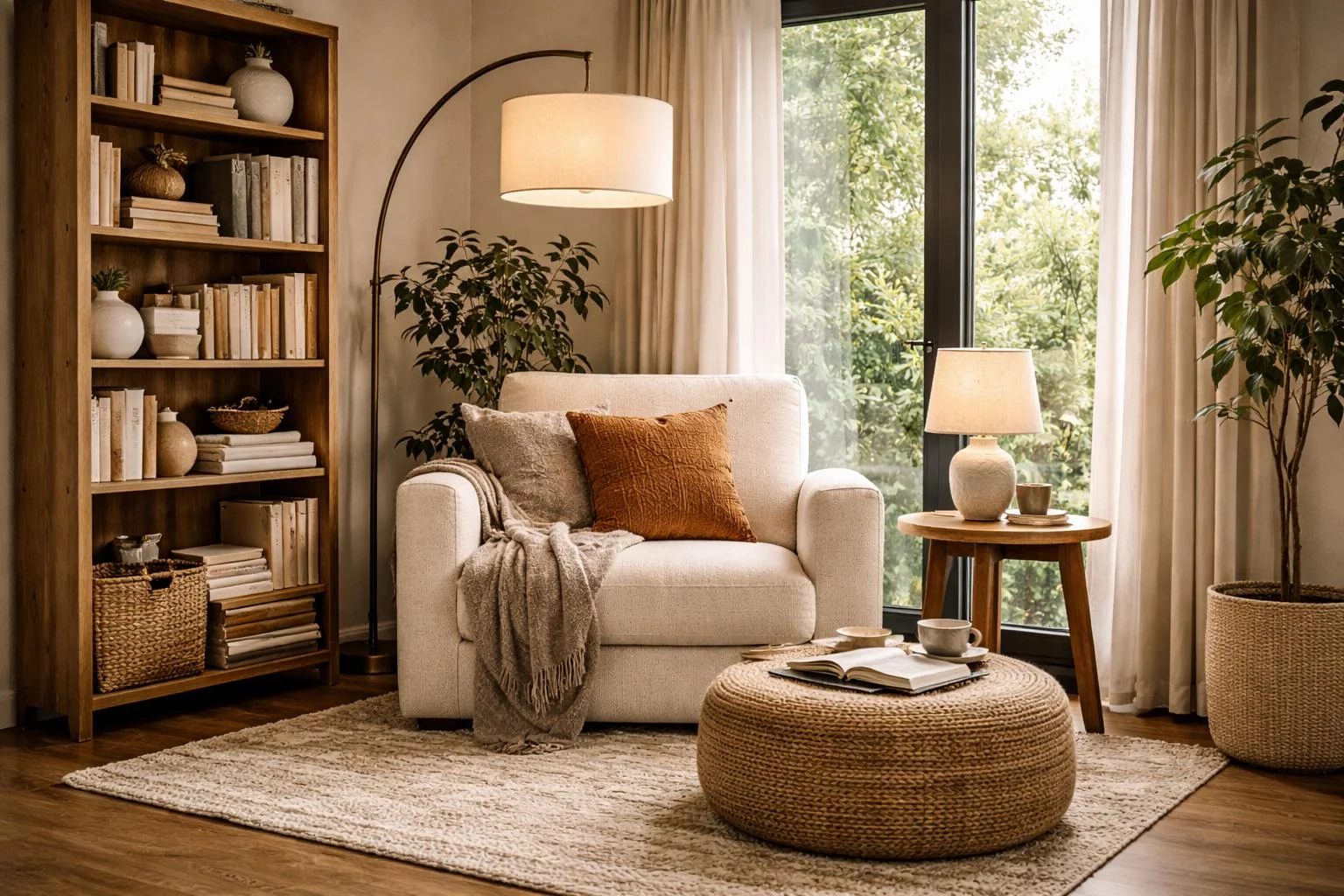
- A comfortable seat. A chair, a large cushion, or a corner of a sofa.
- Enough light — but not harsh light. A lamp or a window usually works better than overhead lighting.
- A surface within reach. A small table or stool for a cup, a book, or a pair of glasses.
- A way to keep distractions at arm's length. Ideally, the phone is somewhere else.
Small Spaces Count
A space to unwind does not need to be a room. It can be:
- A single chair by a window.
- A cushion on the floor next to a bookshelf.
- One end of a kitchen table, cleared of everything else.
- A spot on a balcony or in a garden, with a folding chair.
What makes it work is not the size, but that it is understood as yours — a place for rest rather than for tasks.
One small idea: keep something pleasant within reach — a book, a warm blanket, a pair of soft socks. It reduces the number of steps between wanting to rest and actually resting.
Keeping It Useful
A restful space is easily overtaken by other things. A few habits help protect it:
- Keep it free of work items. Laptops, papers, and to-do lists belong somewhere else.
- Keep it tidy enough. Not perfect — just free of things that demand attention.
- Use it regularly. A spot that is used often becomes familiar faster.
- Adjust it when it stops working. If a corner no longer feels restful, a small change — a different chair, more light, a new cushion — often helps.
A Short Summary
A space to unwind is one small, familiar spot in your home that signals rest rather than tasks. It does not need to be large or beautifully arranged. A comfortable seat, manageable light, and a few simple items within reach are usually enough — and using it regularly is what gives it meaning.
Further Reading
- Building an Evening Routine That Fits Your Life — a gentle end to the day.
- Making Room for Rest in a Busy Week — protecting rest time.
- Keeping a Simple Wellbeing Journal — noticing what restores you.
- Everyday Wellbeing — the section on rest, habits, and daily routines.