

What Counts as a Break
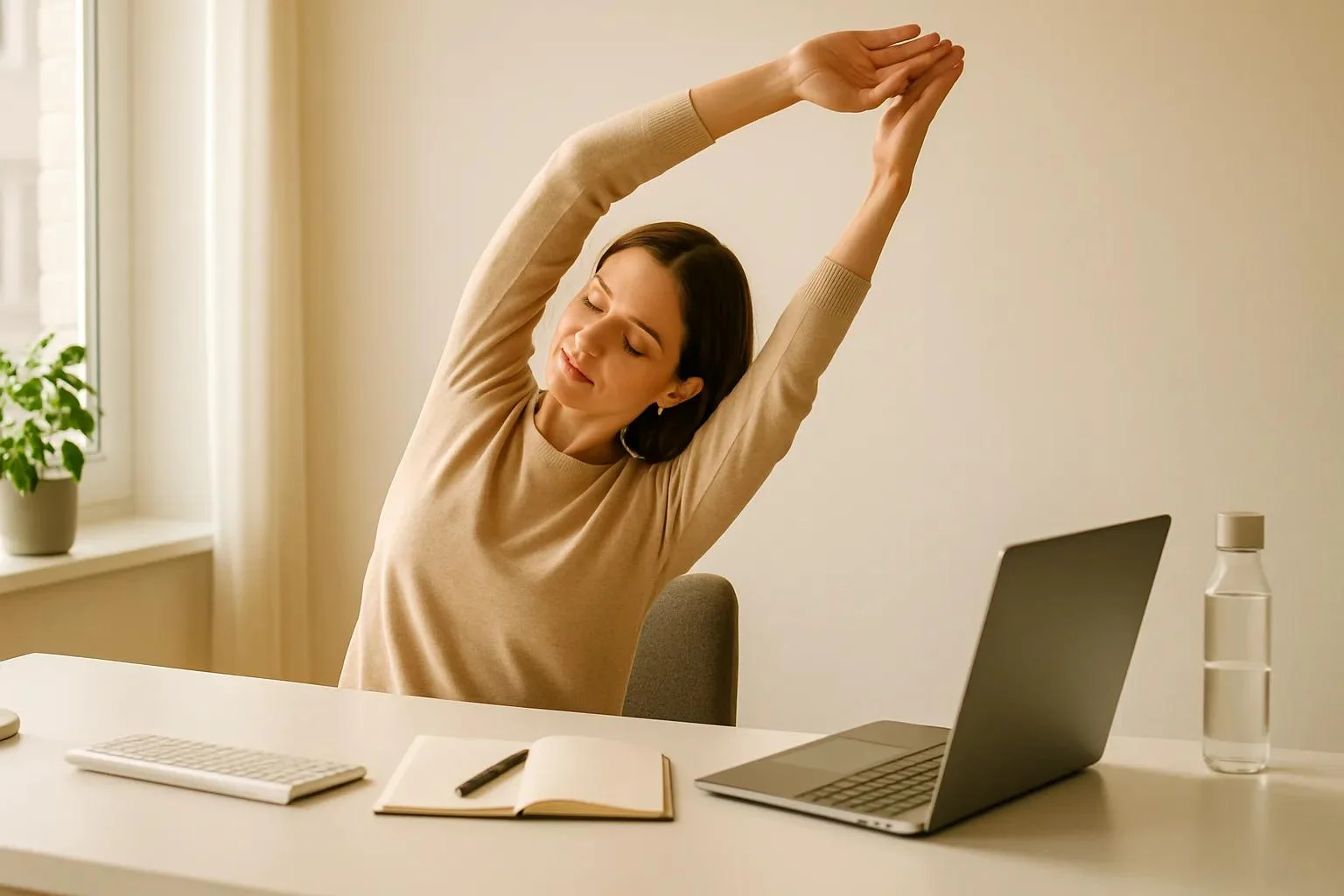
A break does not have to be long to be useful. Two minutes of genuine pause — a stretch, a glass of water, a look out of the window — is often enough to shift attention briefly and reduce the sense of being locked into a task.
What matters is that the break is a real change, not a different form of the same activity. Scrolling through a phone while still sitting at the desk is not rest for the eyes or the body in the same way that standing and looking into the distance is.
A Simple Rhythm
Many people find that a loose rhythm works better than a strict schedule. For example:
- A short pause after completing a task.
- A brief stand-up when a meeting ends.
- A natural break when a drink is finished.
Rigid timers work for some people and feel intrusive for others. The point is not to interrupt focus, but to let the body and eyes have a change before tension builds up.
Short Break Ideas
None of these require equipment or a change of clothes:
- Stand and look into the distance. Twenty seconds of far focus can ease the eyes.
- Shoulder and neck rolls. Slow, small movements at the desk.
- Walk to refill a glass of water. Movement plus hydration in one step.
- Step outside for a minute. Fresh air and daylight, even briefly, can change the feel of an afternoon.
- Ankle and wrist circles. Especially useful if you have been typing or sitting for a long time.
One reminder: a break does not have to be productive. It is not a workout, and it does not need to "earn" anything. Its purpose is simply to interrupt a long stretch of the same posture and the same focus.
When Breaks Feel Impossible
Some days do not have room for breaks. Meetings run back-to-back, deadlines tighten, and the day compresses. On those days, a break may be a single minute rather than five.
A few small adjustments help:
- Attach breaks to existing transitions. When a call ends, stand up before the next one.
- Use the body's own signals. If you notice tight shoulders or tired eyes, that is information.
- Accept a smaller version. Sixty seconds is still a break.
A Short Summary
Short breaks during a desk-based day do not need to be long, formal, or scheduled to the minute. Small, repeated pauses — standing, looking into the distance, walking to refill a glass — help break up long stretches of sitting and concentration. Even a minute counts.
Further Reading
- Building an Evening Routine That Fits Your Life — closing the day gently.
- Making Room for Rest in a Busy Week — protecting rest across the week.
- Gentle Mobility: Getting Started Comfortably — small movements for stiff days.
- Everyday Wellbeing — the section on habits and daily routines.