

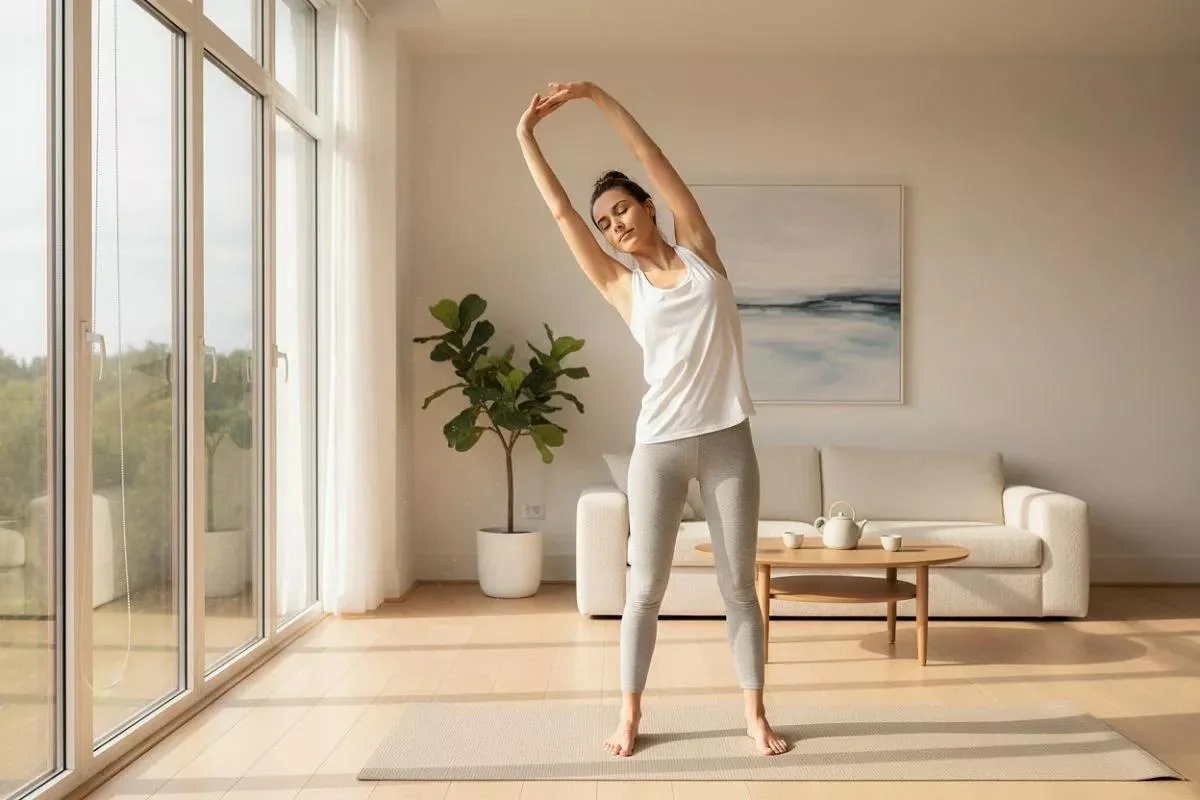
What Gentle Mobility Is
Gentle mobility means moving a joint or muscle group through its comfortable range, slowly, and without forcing. It is not stretching to the point of discomfort, and it is not exercise in the sense of raising the heart rate. It is closer to a warm-up — small, mindful movements that remind the body of its range.
Because it is gentle, it is often suitable for days when energy is low, joints are stiff, or the weather is uninviting. It can be done sitting, standing, or lying down.
Why It Helps
Many people find that a few minutes of gentle movement in the morning, or after long periods of sitting, helps the body feel less stiff. The effect is often modest but noticeable — shoulders move more freely, the neck turns further, and the hips feel less locked.
The reasons are practical: joints and muscles respond to movement, and regular small movements help maintain range. This is general movement physiology, not a cure or a treatment.
A Simple Start
A basic sequence that can be done in five minutes:
- Neck rolls. Slow, half-circles — chin toward each shoulder.
- Shoulder circles. Small at first, then slightly larger.
- Wrist and finger movements. Open, close, rotate.
- Ankle rotations. Sitting or standing, one foot at a time.
- Slow side bends. Reaching toward one side, then the other.
- Gentle knee lifts. Standing, using a chair for balance if needed.
Each movement can be done five to ten times slowly. The pace matters more than the number.
A useful rule: if a movement feels sharp or painful, stop and try a smaller version, or leave it for another day. Gentle mobility should never hurt.
Staying Comfortable
A few practical points make gentle mobility easier to keep up:
- Warmth helps. Movement is easier in a warm room or after a shower.
- Do a little most days. Five minutes daily is more useful than thirty minutes once a week.
- Use support. A chair, a wall, or a counter can make movements feel more secure.
- Adapt, don't skip. If a movement does not suit you today, find a smaller version.
If you have a condition that affects movement, or if you are recovering from injury or surgery, it is worth checking with a healthcare provider or physiotherapist before starting a new routine.
A Short Summary
Gentle mobility means moving joints and muscles slowly through their comfortable range. It does not require flexibility or equipment, and it fits into short daily moments. Small, repeated movements tend to be more useful than intense sessions, and comfort is the guide.
Further Reading
- Making Walking Part of Your Everyday Routine — everyday movement.
- Small Breaks During a Desk-Based Day — short movement in the working day.
- What Are Kegel Exercises? — pelvic floor movement basics.
- Movement & Pelvic Floor — the section on walking, mobility, and body awareness.
Sources
- Centers for Disease Control and Prevention — general physical activity guidance.
- National Institutes of Health — overview material on mobility and movement.
- Office on Women's Health — everyday movement information for adult women.